XPACE: Joint World and Action Modeling from Heterogeneous Experience
Technical report, 2026
One model learns from human and robot experience, predicts actions and video, and simulates recovery trajectories to improve real robot behavior.
Staff Research Scientist · XPENG Robotics
My research focuses on embodied foundation models for whole-body intelligence through agentic world and action modeling. I develop these models for physical agents, combining learning from human and robot experience with the capabilities of general-purpose large language models and agentic systems. I also build virtual worlds for robot learning and evaluation by combining learned dynamics models with physics-based simulation.
I serve as technical co-lead of the World Model team and technical lead of the Robotics Simulation team at XPENG Robotics.
Previously, I was a postdoctoral research fellow at Nanyang Technological University, Singapore, where I also received my Ph.D., advised by Prof. Guosheng Lin and Prof. Kim-Hui Yap. I interned at ByteDance with Dr. Jiashi Feng.
* Equal contribution · † Corresponding author. Full list on Google Scholar.
Technical report, 2026
One model learns from human and robot experience, predicts actions and video, and simulates recovery trajectories to improve real robot behavior.
CoRL 2026
Recompose human interactions across bodies, viewpoints, and scenes to generate robot-native experience.
Technical report, 2026
Learning humanoid dexterous manipulation from human egocentric video with a shared camera-space action representation.
XPENG Robotics Blog, 2026
Studying how cross-embodiment data transfers to humanoid perception, reasoning, planning, and physical action.
ECCV 2026
Generate multiple views of one shared world, with consistent geometry and motion across videos.
arXiv 2026
Long-term interactive digital character simulation via anchored video continuation.
CVPR 2026
Turn video-model priors into a flexible image generator that preserves context across diverse image sets.
ECCV 2026
Edit a 3D object from a coarse region and a reference image while preserving the rest.
AAAI 2026
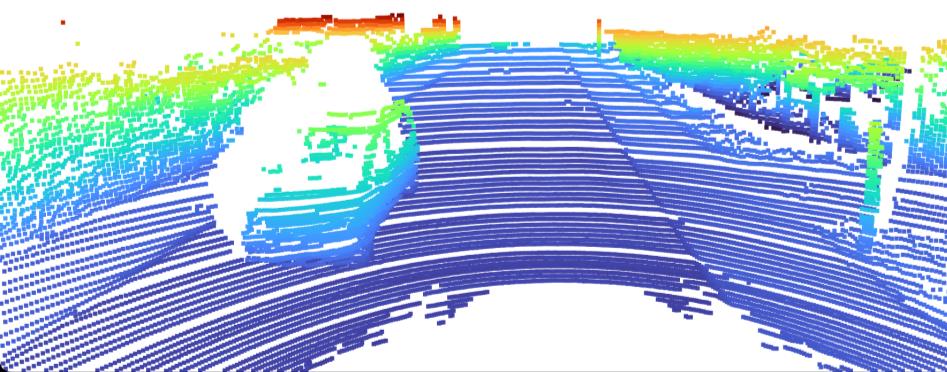
Generating realistic LiDAR point clouds in four sampling steps through adaptive distillation.
NeurIPS 2025
Bring static 3D assets to life with automatic skeletons, skinning, and video-guided animation.
arXiv 2025
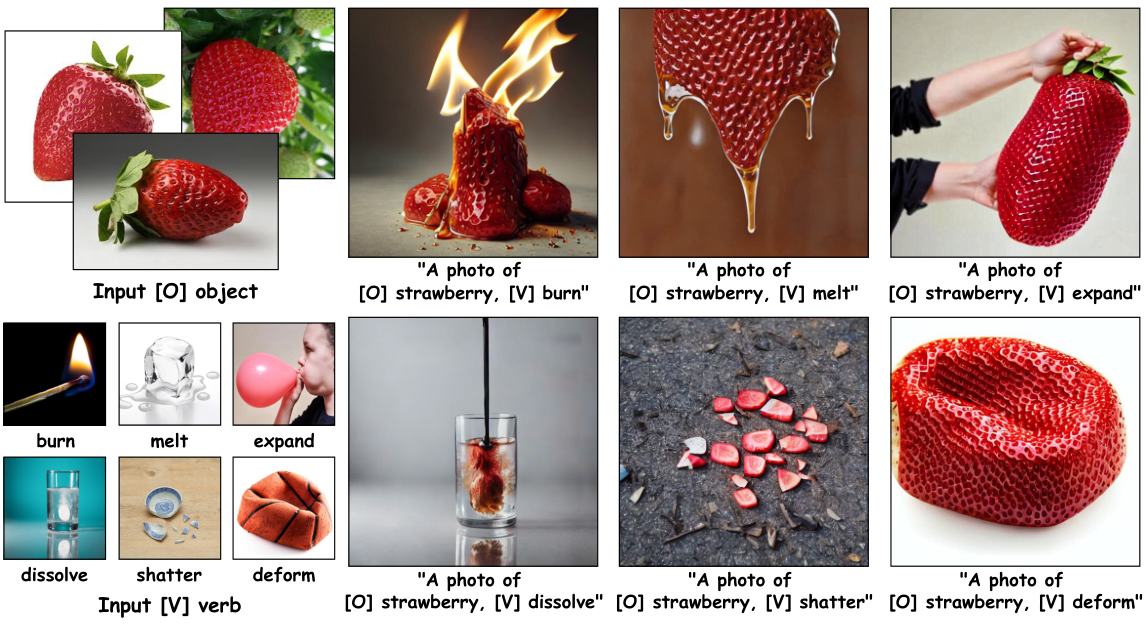
Customizing physical concepts in text-to-image generation through isometric and concept-decoupling regularization.
CVPR 2025
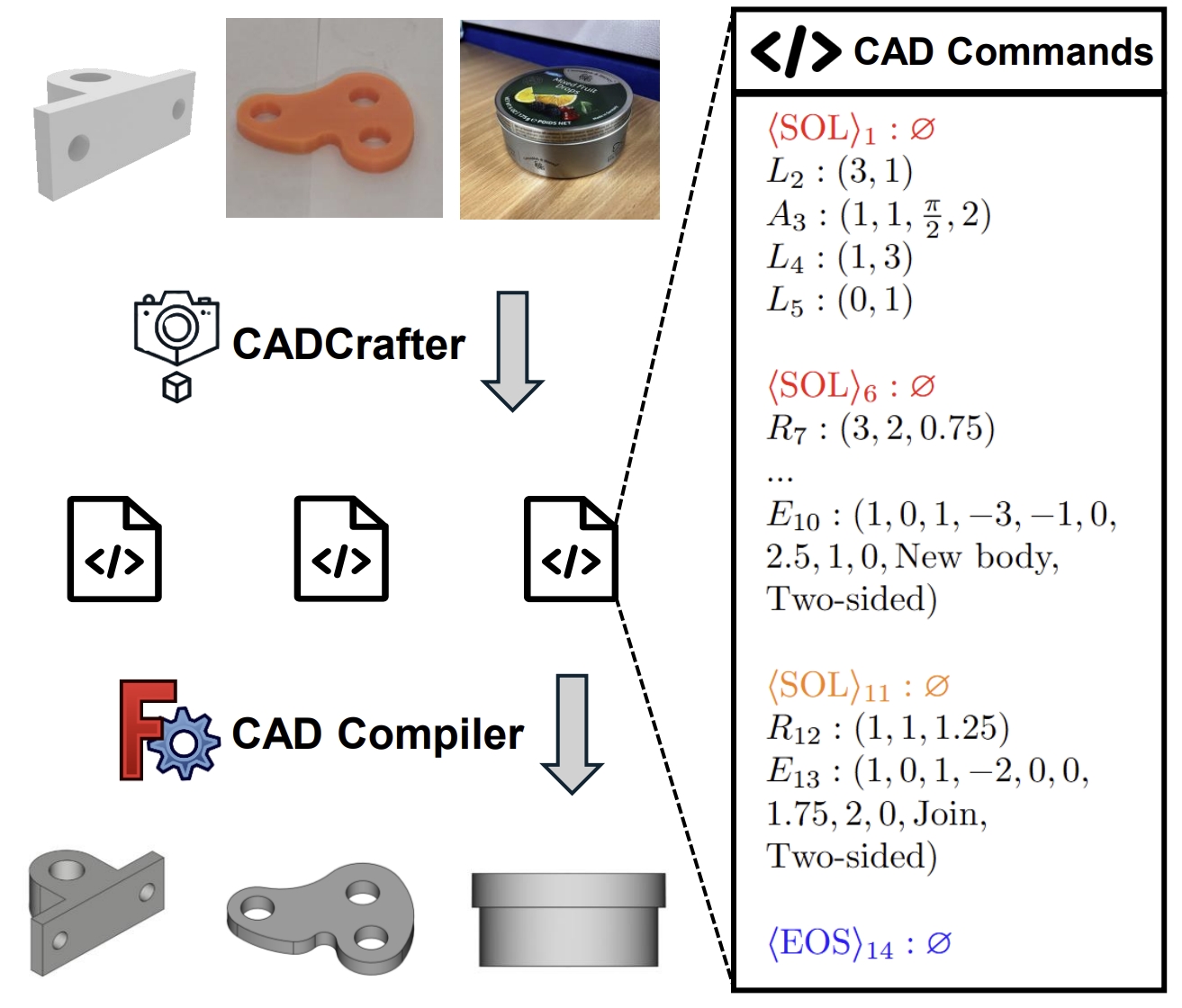
From an everyday image to an editable, parametric CAD model.
arXiv 2025
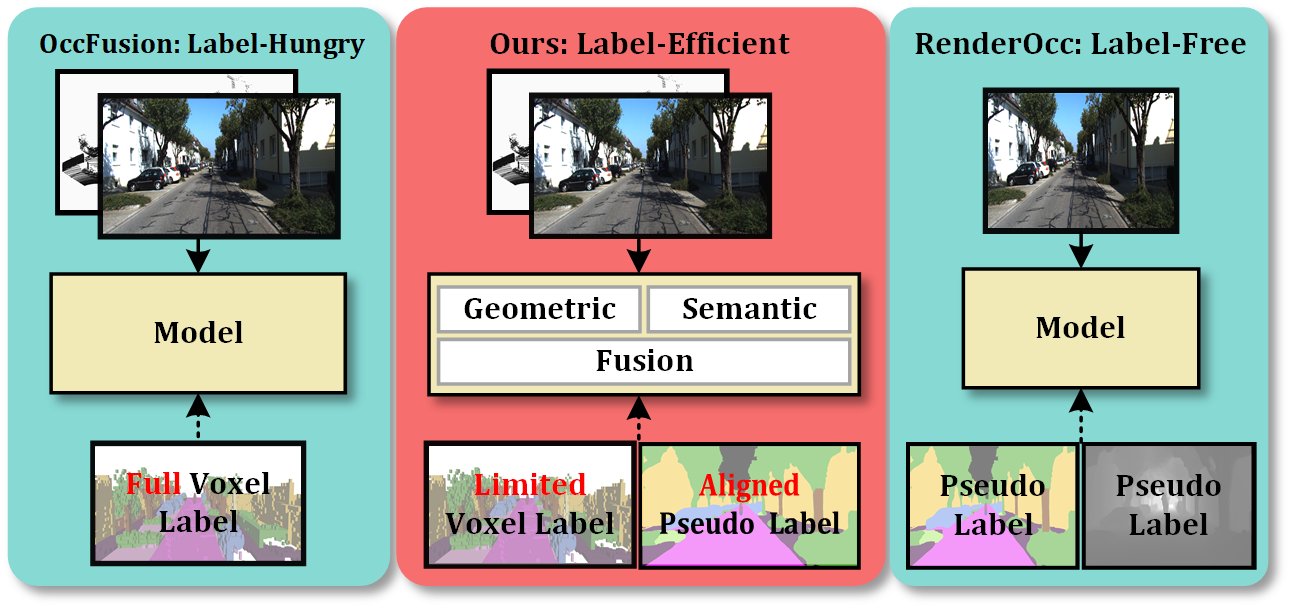
Learning semantic 3D occupancy from images and LiDAR with only a fraction of voxel annotations.
arXiv 2024
Transfer motion from video into controllable, physics-based 4D content.
CVPR 2024
Recover the shape and articulation of moving objects from one casual video.
arXiv 2024
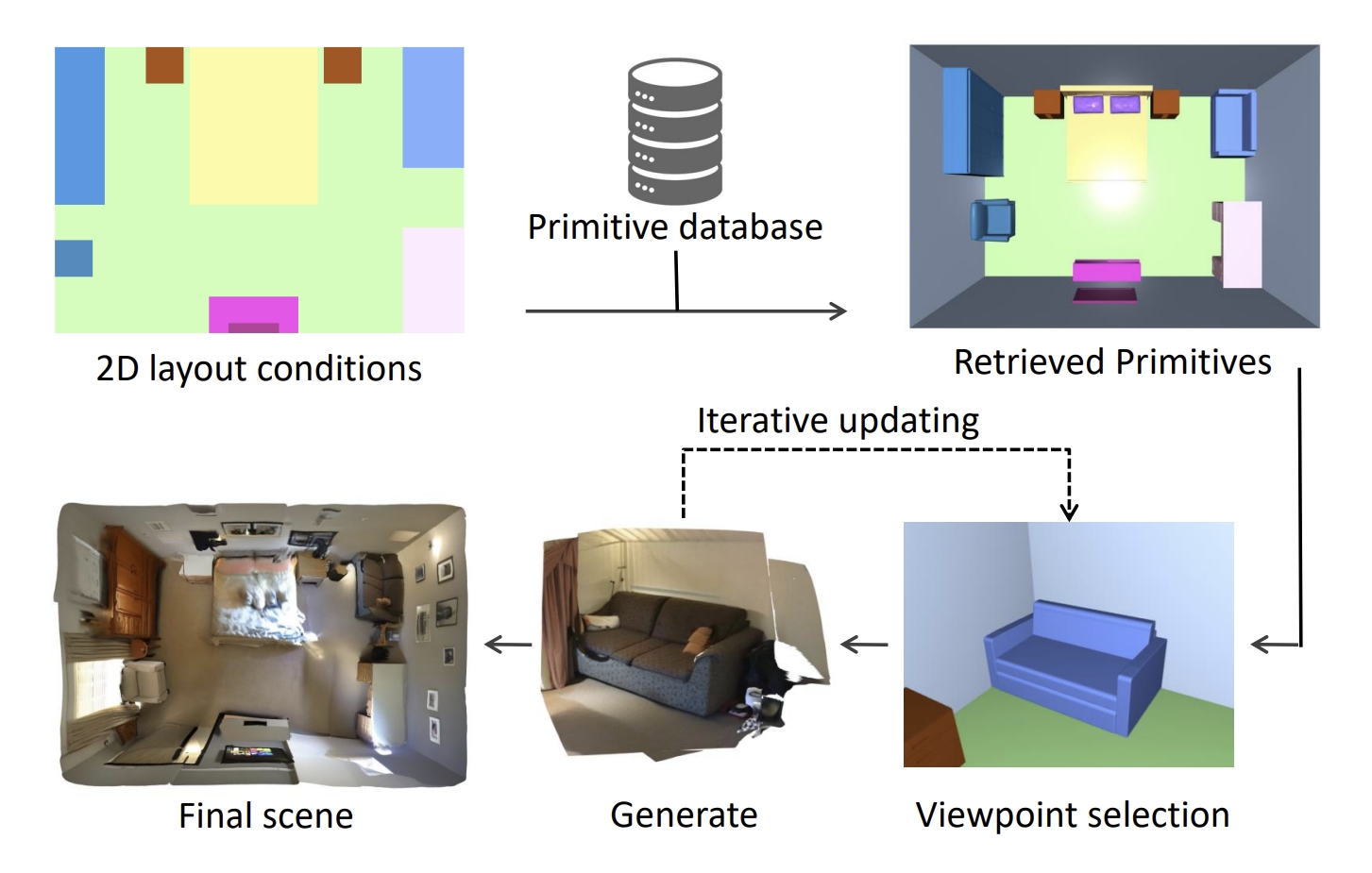
Build room meshes with spatial control through simple geometric primitives.